New PN: Marcus Aurelius
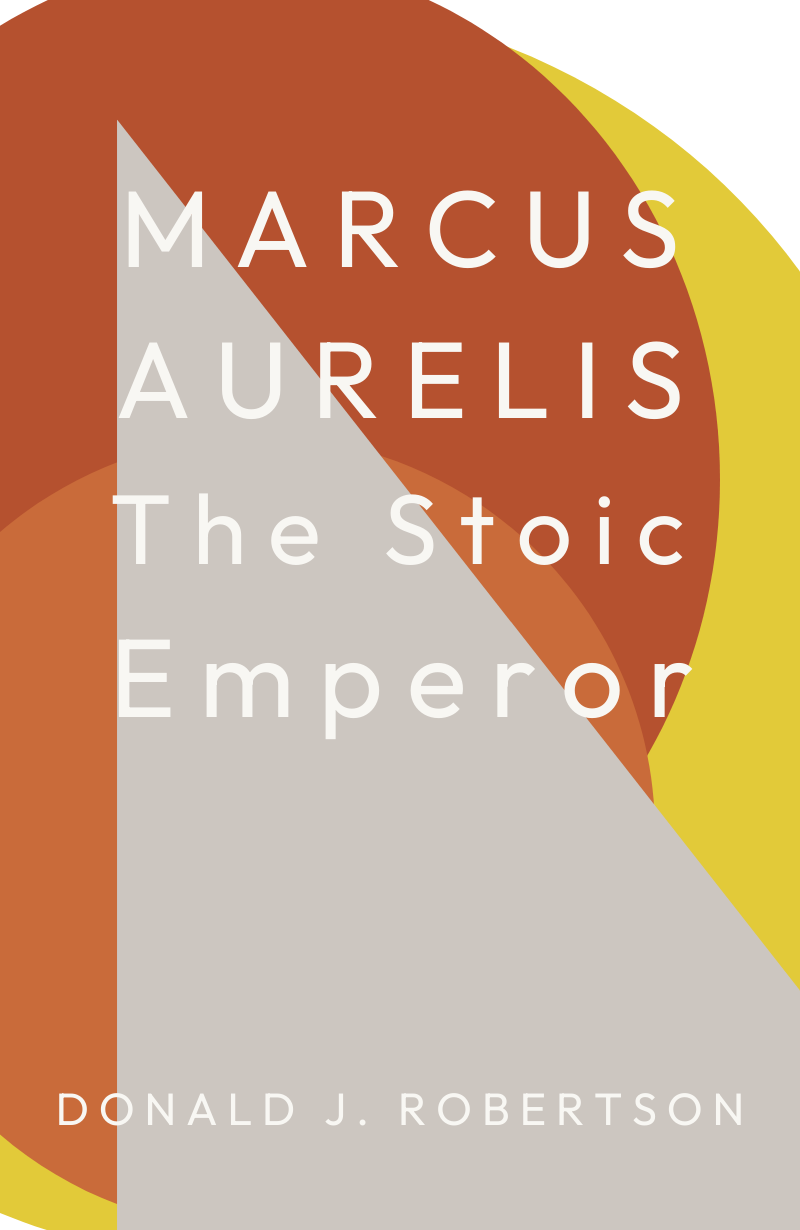 |
The Stoic Emperorby Donald Robertson |
“For the Stoics, to love someone is to wish for that person to flourish, so long as nothing prevents this—to hope, in other words, that the loved one may acquire virtue. We could say then, that Stoicism tried to marry love with wisdom. Indeed, the purest form of love is the desire to attain wisdom and share it with others for the common good.”DONALD ROBERTSON |
FROM THE BOOK“Stoicism flourished for five centuries in the ancient world, and numerous proponents spoke to its benefits and appeal.
Today thousands of psychological research studies provide scientific evidence for the effectiveness of modern cognitive psychotherapy, which was originally inspired by the Stoics. Many modern readers likewise find in Stoicism a profoundly life-changing philosophy—one which heals certain emotions rather than merely eliminating all of them.
Trying to write a biography of Marcus Aurelius without due attention to the influence of Stoicism would, indeed, be as absurd as trying to write about Saint Augustine while ignoring his Christian faith. Marcus was engaged in a process of both moral and therapeutic self-improvement. We cannot understand his character without understanding why Stoicism became so important to him and how it shaped his actions. In this book I aim, therefore, to weave together evidence of his inner thoughts and values, found in his private notes and letters, with evidence of his outward actions, taken from Roman historians and other ancient sources.
In this modern biography I build on these fragments, and other sources, to show how Marcus took inspiration from his family and his tutors as a young man, and how he proceeded to apply the Stoic philosophy they taught him to the enormous challenges he faced as emperor.”
|
Brian's Notes
Donald Robertson is one of my favorite writers and humans.
In addition to being one of the world’s leading practitioners and scholars of Stoicism, he’s an incredibly good human being—humble, wise, thoughtful, caring, and generous.
I say that after having the chance to spend some time with Donald on a trip to Athens. We were blessed to have him join us along with a couple hundred members of our Heroic community. It was a really special trip.
We visited the Acropolis, the museums, and the stadium in which the first modern Olympics was held. We even boarded an ancient Athenian warship and listened to Donald give us a lecture on How to Think Like Socrates on the grounds of Plato’s Academy.
But, one of the most powerful highlights of the trip for me was watching Donald interact with our community. I literally got tears in my eyes typing that. He was always so present, so joyful, and so committed to sharing his love of life and his love of Stoic philosophy.
He would have made Aurelius, Seneca, and Epictetus proud to know our modern world has a worthy exemplar practicing their philosophy. He certainly inspired *me* to practice mine.
This is the FOURTH Note I’ve created on one of Donald’s great books. (Get a copy of it here.)
I started with The Philosophy of Cognitive Behavior Therapy then we covered How to Think Like a Roman Emperor then How to Think Like Socrates.
This book is part of Yale University Press’s “Ancient Lives” series.
James Romm, the Series Editor, says: “Ancient Lives unfolds the stories of thinkers, writers, kings, queens, conquerors, and politicians from all parts of the ancient world. Readers will come to know these figures in fully human dimensions, complete with foibles and flaws, and will see that the issues they faced—political conflicts, constraints based in gender and race, tensions between the private and public self—have changed very little over the course of millennia.”
Donald is simply the *perfect* guy to create this biography of Aurelius—”exploring the emperor’s fascinating psychological journey” while sharing practical wisdom we can apply to our modern lives. I’m excited to share some of my favorite Big Ideas so let’s get to work!
P.S. Check out Stoicism 101 and Notes on some of my other favorite books on Stoicism including: The Inner Citadel by Pierre Hadot, The Daily Stoic by Ryan Holiday, The Practicing Stoic by Ward Farnsworth, The Stoic Challenge by William B. Irvine, How to Be a Stoic by Massimo Pigliucci, and Breakfast with Seneca by David Fideler.
Big Ideas
01: THE CHOICE OF HERCULES
02: TO HIMSELF
03: EPICTETUS
04: ON LOAN
05: THE IDEAL SAGE
“Indeed, the Stoic ideal was to be free of irrational and unhealthy passions and yet full of rational and healthy ones, particularly natural affection. Commendable emotions such as friendship and love play an important role in the philosophy.”DONALD ROBERTSON |
Get all 700+ notes and 101 masterclasses.
Master the Big Ideas from the best books in under 20 minutes a day for one lifetime payment of $99.