Big Idea Daily | Rise Above
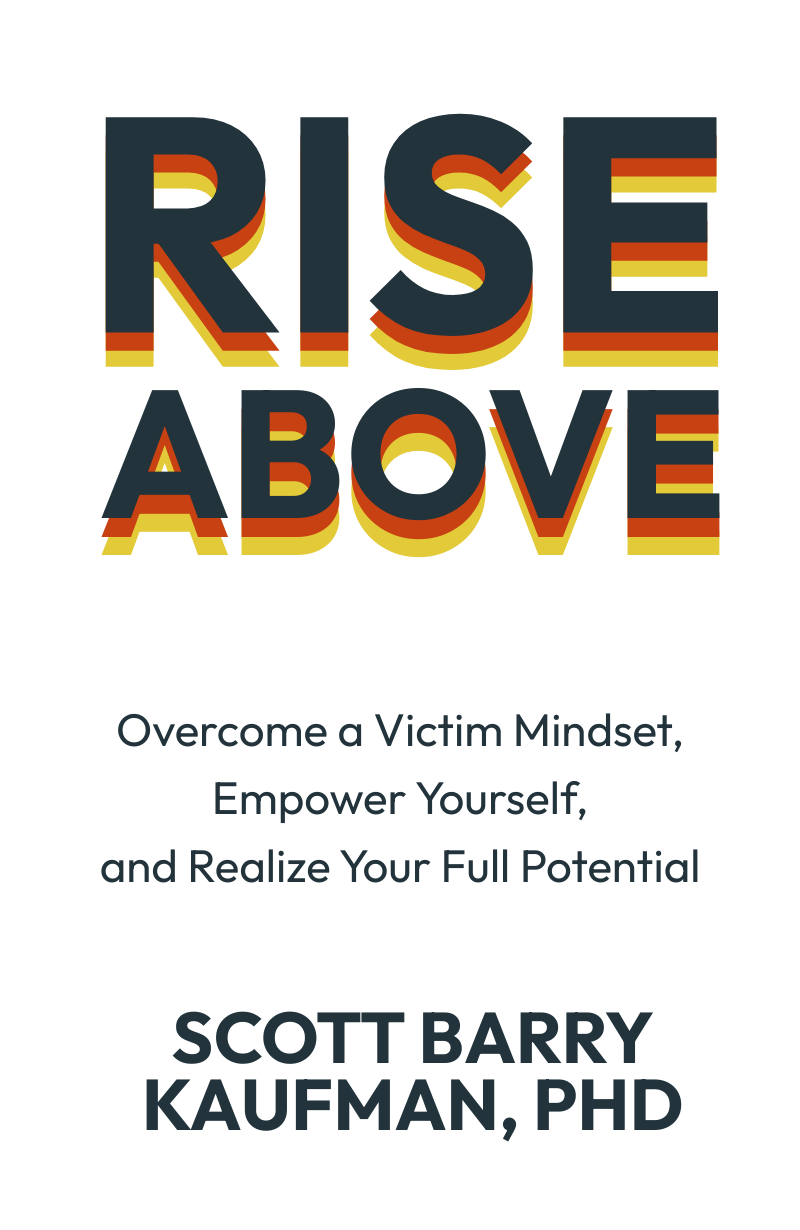 |
Overcome a Victim Mindset, Empower Yourself, and Realize Your Full Potentialby Scott Barry Kaufman |
“We’ve got to stop operating with this idea that life is not supposed to be hard, and if it is hard, something is wrong.”SCOTT BARRY KAUFMAN |
BIG IDEA
Meet Your Heroic Guide
FROM THE BOOK“Growing up, I was an extremely anxious and sensitive soul who also happened to have an auditory processing disability.
That was a tough combination. It was hard for me to hear things in real time and it was especially hard for me to process auditory directions in real time. To all outward appearances, I was decidedly ungifted. As a result, I was placed in special education, which only caused me greater anxiety and a pervasive sense of shame.
In some ways special education was helpful because I received a lot of extra resources, some of which I truly needed—at least at first. At the same time, I found that I enjoyed getting all sorts of extra accommodations and being treated as ‘special.’ Again, at first....
Then, one day toward the start of high school, we had a new special education teacher who was covering for our regular teacher. I had never seen her before, and she had never seen me. She had no history of expectations about my performance. Having noticed my frustration and snarkiness, after class she took me aside.
She looked at me and it was like she was peering into my soul. Finally, she tilted her head and said, ‘I see you. I can sense your frustration. What are you still doing here?’
Her question rang in my ears. It quickly shifted to Yeah, what am I still doing here?”
|
Brian's Notes
That’s from the Introduction in which we learn that Scott wasn’t some superstar from Day 1 who grew up with all the trappings of being awesome.
He was an “extremely anxious and sensitive soul” who struggled so much with his auditory disabilities in school that they put him in special education.
I got tears in my eyes when I typed out the story about his new special education teacher pulling him aside, looking deeply into his soul and telling him she could SEE him.
That moved me for a few reasons.
First, the obvious reason. Wow. What a wonderful, life-changing woman, eh? Incredible.
Second, I want to be THAT guy for YOU. I need you to know that, even though we almost certainly haven’t met yet and I know next to nothing about you, I SEE you. I KNOW beyond a shadow of doubt that YOU (YES, YOU!) are the Hero we’ve been waiting for. Period.
Your Heroic potential may be buried under a lot of stuff we get to chip away at, but there is ABSOLUTELY NOTHING you could ever tell me that would convince me to think otherwise.
Third, I think of how important it is that we see that potential within ourselves so we do the same thing Scott’s teacher did for him—seeing the potential within everyone in our lives.
Now... All that’s nice and warm and fuzzy, eh?
What makes this book so great is that Scott tells us pretty much EXACTLY how to, I repeat, “RISE ABOVE” our limitations as we “Overcome a Victim Mindset, Empower Yourself, and Realize Your Full Potential.”
Before we move on, I want to emphasize the transition from Victim to Hero that Scott made and that we all need to make.
Of course, I could pull from any of our Notes on Joseph Campbell’s books to make a few Heroic points here but I’m going to go with Donald Miller’s wisdom in Hero on a Mission.
He tells us: “The heroic transformation begins when the hero takes responsibility for their life and their story. The hero becomes the hero only when they decide to accept the facts of their life and respond with courage.”
And: “What is the essence of heroic energy? A hero wants something in life and is willing to accept challenges in order to transform into the person capable of getting what they want.”
And, perhaps most importantly: “In stories, there are four primary characters:
- The victim is the character who feels they have no way out.
-
The villain is the character who makes others small.
-
The hero is the character who faces their challenges and transforms.
-
The guide is the character who helps the hero.
As you read a story or watch a movie, you feel sympathy for the victim, you cheer for the hero, you hate the villain, and you respect the guide.
These four characters exist in stories not only because they exist in the real world but because they exist inside you and me.”
The question is: What role will YOU play in the world?
P.S. As I read the story about Scott’s Heroic transformation from special education to one of the world’s most-cited social psychologists, I thought of Jim Kwik.
In Limitless he tells us about HIS Heroic quest. After suffering a brain injury in kindergarten, he was described by a teacher as the kid “with a broken brain.” Fast forward through decades of overcoming challenges and he’s now one of the world’s most-respected and sought after experts on learning and activating our potential in every area of our lives.
He echoes this wisdom: “In the hero’s journey, the heroes need villains just as much as villains need heroes. The challenges from trials and rivals make us grow and become better. The power and strength of the villain determines the necessary power and strength of the hero. If the villain is weak, there would be nothing to vanquish—and no need for the hero to rise to greatness.”
Big Ideas
01: MEET YOUR GUIDE
02: WARNING!
03: #1 EMOTIONAL SKILL
04: HEALTHY SELFISHNESS
05: FIND THE LIGHT WITHIN
“I am not what happened to me. I am what I choose to become.”CARL JUNG |
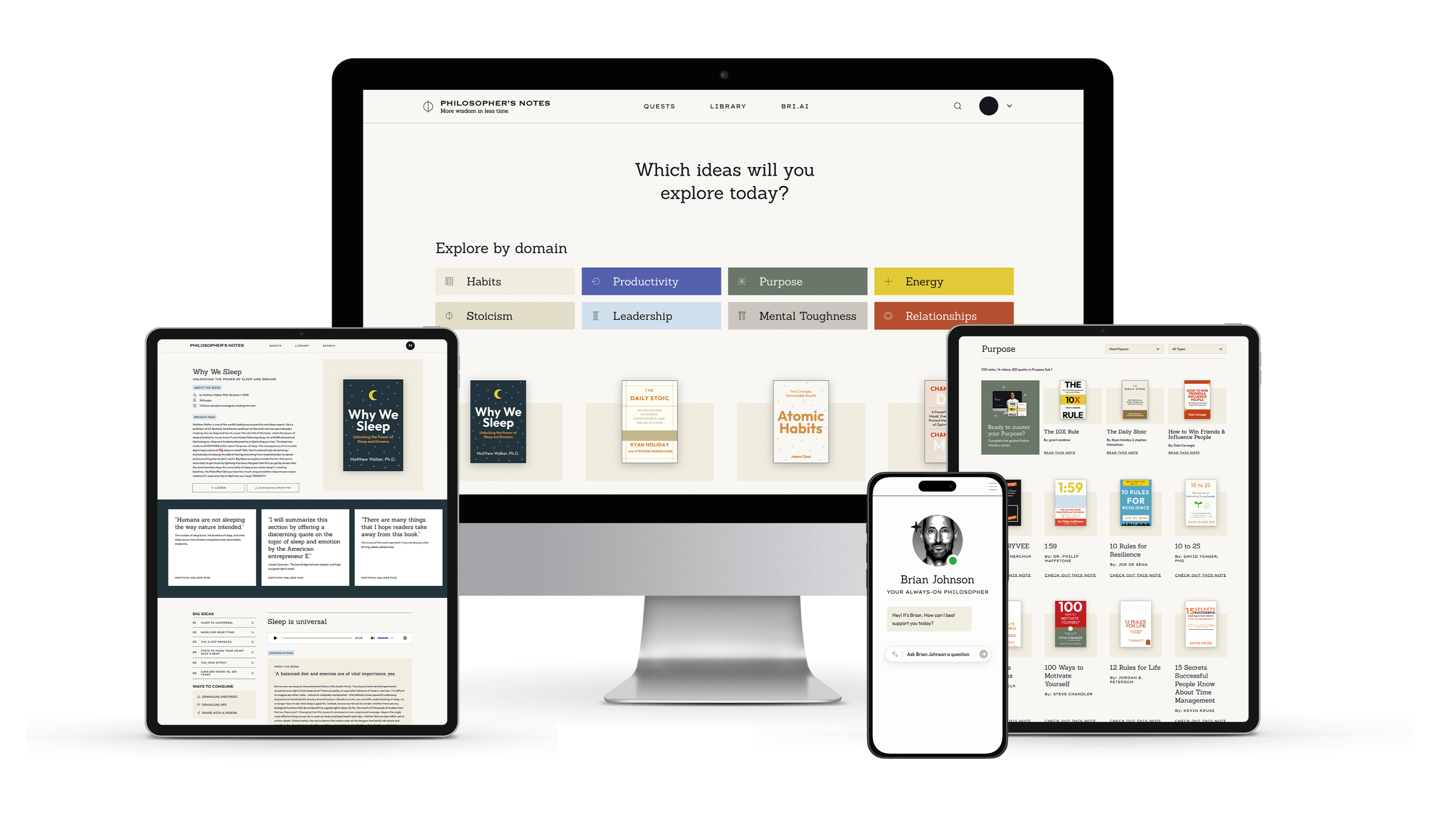
Get all 700+ notes and 101 masterclasses.
Master the Big Ideas from the best books in under 20 minutes a day for one lifetime payment of $99.